
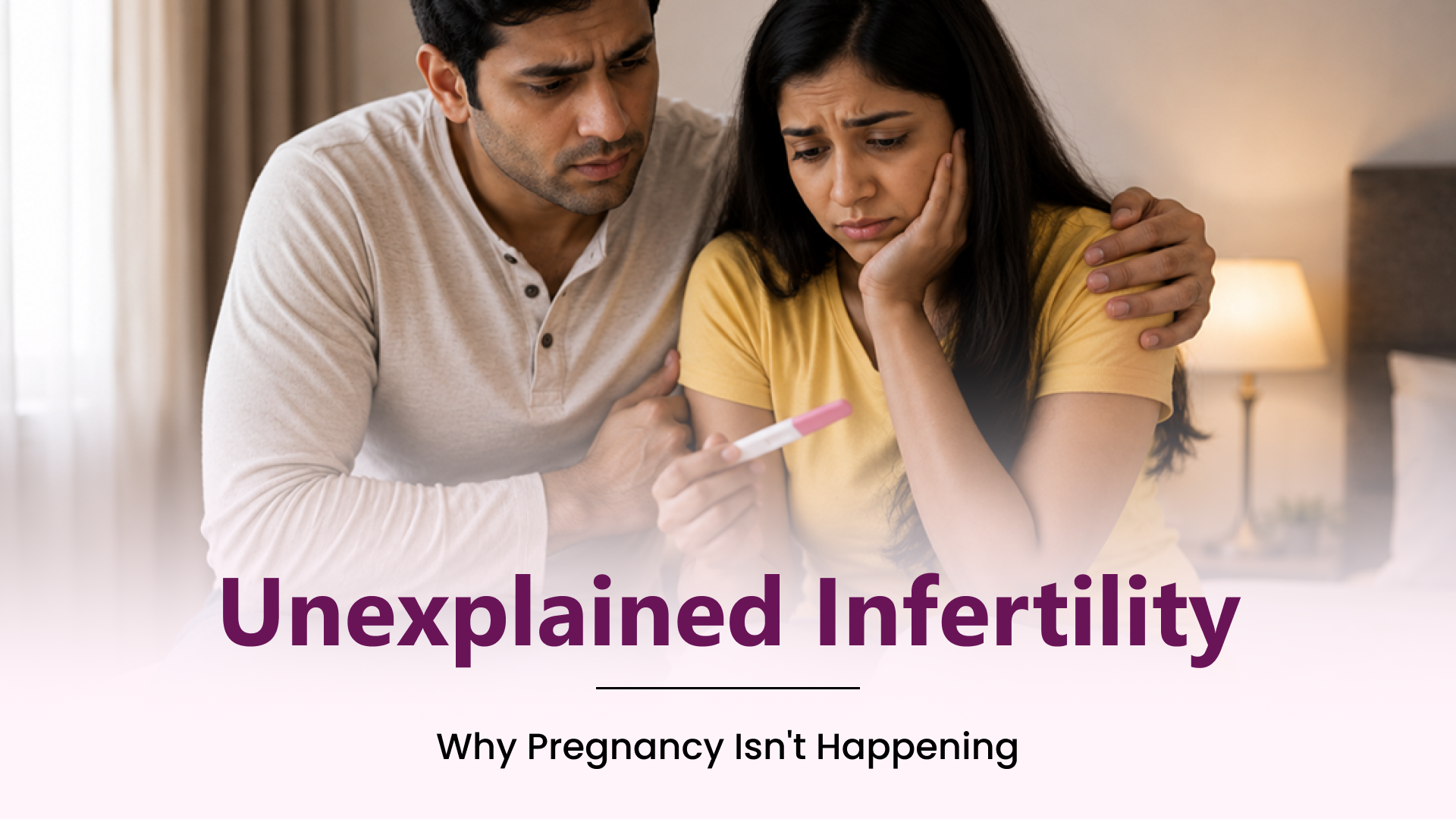

Few things are more frustrating for a couple than being told everything looks ‘normal’ — hormone levels, ovulation, sperm count, tubes — and yet month after month, pregnancy still doesn’t happen. This is exactly what doctors mean by unexplained infertility, and it affects a meaningful share of the couples who visit our female fertility clinic in Bhopal. Normal test results do not mean nothing is wrong; they usually mean the cause hasn’t been identified yet with standard testing.
What Does ‘Unexplained Infertility’ Actually Mean?
Unexplained infertility is a diagnosis given after a full standard fertility work-up — ovulation tracking, tubal patency, semen analysis, and basic hormone testing — comes back without an obvious problem. It is not a dead end; it is usually a signal that more detailed or advanced investigation is needed. Many couples who eventually conceive through IVF treatment at our Bhopal clinic started with exactly this diagnosis.
Why Standard Tests Can Miss the Real Cause
Routine fertility testing is designed to catch major, obvious problems, but it often cannot detect subtler issues like mild egg quality decline, minor ovulatory irregularities, or borderline hormonal conditions. Even a mild, undiagnosed case of PCOS can quietly affect ovulation timing without showing up clearly on a basic scan, which is one reason a more detailed hormonal work-up is often the next recommended step.
Hidden Factors That Often Go Unchecked
Egg Quality Beyond Ovarian Reserve Numbers
A normal AMH or antral follicle count tells you how many eggs remain, but not how healthy those eggs are. Egg quality naturally declines with age even when reserve numbers look reassuring, which is a common blind spot in a standard infertility work-up.
Subtle Sperm DNA Fragmentation Issues
A standard semen analysis checks count, motility, and shape, but does not assess sperm DNA integrity. Sperm DNA fragmentation can reduce the chances of fertilization and healthy embryo development even when a semen analysis report reads as completely normal.
Undiagnosed Mild Endometriosis
Endometriosis is a well-documented cause of infertility that frequently does not show up on a routine ultrasound, especially in its milder forms. Persistent period pain or chronic pelvic pain alongside normal fertility reports is worth flagging specifically to your specialist, since it often points toward this exact possibility.
The Role of Age Even When Reports Look Normal
Age affects fertility independently of what a hormone panel shows on a given day. A 38-year-old and a 28-year-old can have identical-looking reports, yet very different real-world chances of conceiving naturally each month. This is one reason many couples with unexplained infertility are advised to consider treatment at our test tube baby center in Bhopal sooner rather than continuing to try naturally for many more months.
When Ectopic Pregnancy History Complicates the Picture
Couples with a prior ectopic pregnancy sometimes face reduced tubal function afterward, even if a hysterosalpingogram appears to show one tube working normally. This history is an important detail to share with your specialist, since it can quietly shift the odds of conception each cycle.
What the Next Step Usually Looks Like
For many couples with unexplained infertility, the next reasonable step is a time-limited trial of IUI treatment, especially if the couple is younger and has been trying for a shorter period. For couples who are older, have been trying longer, or want to move more directly toward a solution, IVF often offers a faster and more controlled path forward, partly because it allows embryologists to directly observe fertilization and embryo development rather than relying on assumptions.
Conclusion
A diagnosis of unexplained infertility is frustrating, but it is rarely the end of the story. It usually means the next step is more detailed testing, not giving up. At our female fertility clinic in Bhopal, Dr. Sonil Srivastava works through this deeper evaluation with couples methodically, so the real, underlying reason gets identified rather than left as a mystery.
Frequently Asked Questions
How common is unexplained infertility?
It is diagnosed in a meaningful share of infertility cases even after a complete standard evaluation, and it is far more common than most couples realise.
Does unexplained infertility mean IVF is the only option?
Not necessarily. Depending on age and how long the couple has been trying, IUI, ovulation induction, or further diagnostic testing may be tried before IVF.
Can lifestyle factors cause unexplained infertility?
Weight, stress, smoking, and sleep patterns can all subtly affect fertility and are usually reviewed as part of a deeper evaluation.
Should both partners be re-tested if the first results were normal?
Often yes — more advanced tests like sperm DNA fragmentation analysis or a detailed hormonal panel can reveal issues a basic work-up misses.
How long should we try naturally before seeking a specialist opinion?
Generally up to one year under age 35, and six months if the woman is over 35, though this can vary based on individual history.
Is unexplained infertility more common with age?
Yes, because age-related decline in egg quality often doesn’t show up clearly on standard test reports, which contributes to this diagnosis.
If your reports look normal but pregnancy still hasn’t happened, don’t wait for more unanswered cycles. Book a detailed fertility evaluation with Dr. Sonil Srivastava. Get in touch with Dr. Sonil Srivastava’s IVF team.