

Introduction
Endometriosis is one of the most frequently overlooked causes of female infertility. Studies suggest that 25–50% of women with infertility have endometriosis, yet the condition is often missed for years because its symptoms — painful periods, pelvic pain, pain during intercourse — are frequently dismissed or misattributed to other causes.
For women struggling to conceive, understanding the relationship between endometriosis and infertility is critical. More importantly, understanding when and why diagnostic laparoscopy is recommended can be the turning point in a fertility journey. If you are looking for the best gynaecologist in Bhopal or seeking guidance on endometriosis treatment in Bhopal, this article explains how a single procedure can dramatically change your path to parenthood.
What Is Endometriosis and How Does It Affect Fertility?
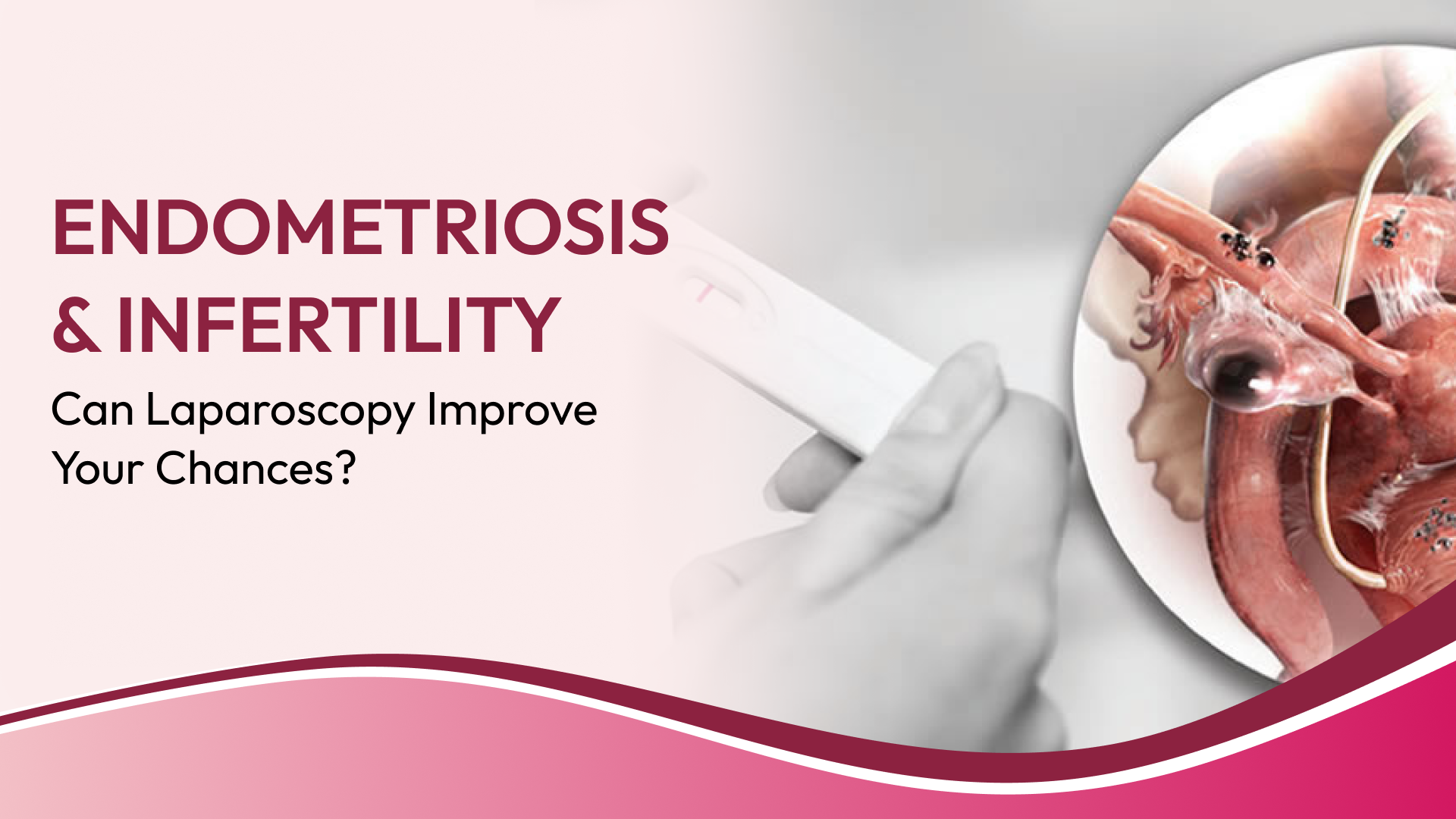
Endometriosis occurs when tissue similar to the lining of the uterus (endometrium) grows outside the uterus — on the ovaries, fallopian tubes, the outer surface of the uterus, and other pelvic structures. Like the normal endometrial lining, this misplaced tissue responds to monthly hormonal changes: it thickens, breaks down, and bleeds. But unlike normal menstrual blood, this blood has nowhere to exit, leading to inflammation, scar tissue (adhesions), and cyst formation.
How Endometriosis Interferes with Conception
- Distorted pelvic anatomy — adhesions can block fallopian tubes or displace the ovaries
- Poor egg quality — inflammation from endometriosis negatively affects the follicular environment
- Impaired implantation — the altered uterine environment makes it harder for embryos to implant
- Endometriomas — ovarian cysts filled with old blood (“chocolate cysts”) that damage healthy ovarian tissue
- Immune dysfunction — elevated inflammatory markers in peritoneal fluid can be toxic to sperm and embryos
The severity of endometriosis does not always correlate with symptom severity. A woman with minimal visible lesions may have significant fertility impairment, while another with extensive disease may conceive naturally. This unpredictability is precisely why diagnostic laparoscopy remains the gold standard for diagnosis.
Why Imaging Alone Is Often Not Enough
Ultrasound and MRI are valuable tools for detecting ovarian endometriomas (chocolate cysts) and deeply infiltrating endometriosis. However, they cannot detect peritoneal endometriosis — tiny implants on the pelvic lining and surfaces that are invisible to imaging but can significantly impair fertility. A woman with normal ultrasound findings may still have Stage I or Stage II endometriosis that is only visible under direct laparoscopic inspection.
This is a critical point: a “normal” ultrasound does not rule out endometriosis. Many women spend years on treatment that isn’t addressing the root cause because they never had a definitive diagnosis.
What Is Diagnostic Laparoscopy?
Diagnostic laparoscopy is a minimally invasive surgical procedure performed under general anaesthesia. A thin camera (laparoscope) is inserted through a small incision near the navel, allowing the surgeon to directly visualise the entire pelvic cavity — the uterus, ovaries, fallopian tubes, bladder surface, bowel surface, and pelvic sidewalls.
What the surgeon looks for:
- Endometriotic implants (blue-black, red, or clear lesions on pelvic surfaces)
- Adhesions (fibrous bands that stick organs together)
- Ovarian endometriomas (chocolate cysts)
- Tubal patency (whether the fallopian tubes are open, tested by injecting dye — a procedure called chromopertubation)
- Uterine abnormalities visible from the outside
Importantly, diagnostic laparoscopy is almost always combined with operative laparoscopy — meaning if endometriosis is found, it is treated in the same sitting, removing the need for a second procedure.
The Four Stages of Endometriosis (ASRM Classification)
The American Society for Reproductive Medicine (ASRM) classifies endometriosis into four stages based on the laparoscopic findings:
- Stage I (Minimal): Isolated implants, no significant adhesions
- Stage II (Mild): More implants, shallow endometriosis on the ovary
- Stage III (Moderate): Many deep implants, small endometriomas, some filmy adhesions
- Stage IV (Severe): Large endometriomas, dense adhesions, distorted pelvic anatomy
The stage determined at laparoscopy directly informs the treatment plan — which is why the procedure is so pivotal in fertility management.
How Diagnostic Laparoscopy Changes the Treatment Plan
Scenario 1: Stage I–II Endometriosis Found
For younger women (under 35) with Stage I–II endometriosis and no other infertility factors, surgical excision or ablation of lesions at laparoscopy has been shown to improve spontaneous pregnancy rates. The ENDOCAN trial showed a modest but meaningful improvement in pregnancy rates after laparoscopic surgery for minimal-mild endometriosis, compared to diagnostic laparoscopy alone.
Treatment plan after surgery: A 6–12 month trial of natural conception or IUI, before considering IVF.
Scenario 2: Blocked Tubes Found
If chromopertubation (dye test during laparoscopy) reveals blocked fallopian tubes — whether from endometriosis, adhesions, or previous infection — the treatment plan shifts significantly. Tubal factor infertility means IVF is typically required, since conception through the tubes is not possible.
Without laparoscopy, this finding would be missed or only suspected on HSG (hysterosalpingography), which can have false positives and negatives.
Scenario 3: Endometrioma Discovered
An ovarian endometrioma affects not only the cyst itself but also the surrounding healthy ovarian tissue. The decision whether to surgically remove it before IVF or proceed directly to IVF is nuanced and depends on cyst size, patient age, and ovarian reserve. Laparoscopy allows direct assessment of the cyst and the surrounding ovary, informing this decision far better than ultrasound alone.
Scenario 4: No Endometriosis Found
A normal laparoscopy is also informative. If no endometriosis is found and tubes are patent, the infertility workup shifts focus to other causes — male factor, ovarian reserve, uterine cavity issues — and the treatment plan is revised accordingly.
Who Should Consider Diagnostic Laparoscopy for Infertility?
- Women with suspected endometriosis based on symptoms (painful periods, pelvic pain, pain with intercourse)
- Women with unexplained infertility after basic workup (including normal ovarian reserve, normal semen analysis, no uterine abnormality on hysteroscopy)
- Women who have had multiple failed IUI cycles
- Women with known endometriomas on ultrasound where surgical management is being considered
- Women with a history of pelvic surgery or pelvic inflammatory disease (PID) where adhesions are suspected
The decision to proceed with laparoscopy must always be individualised. For older women (over 38) or those with significantly diminished ovarian reserve, the calculus may favour proceeding directly to IVF without surgery, given the time and recovery involved.
Laparoscopic Treatment of Endometriosis — What Happens During Surgery?
When endometriosis is found at diagnostic laparoscopy, the surgeon proceeds with operative laparoscopy to:
- Excise endometriotic implants (cut and remove the lesion entirely)
- Ablate (destroy with energy) superficial implants
- Drain and treat endometriomas (though care must be taken to preserve ovarian tissue)
- Lyse (cut) adhesions to restore normal pelvic anatomy
- Release fused structures (e.g., ovary stuck to pelvic wall)
Excision is generally preferred over ablation for deeper lesions, as it removes the full depth of disease and provides a specimen for histological confirmation.
Recovery and Fertility Outcomes After Laparoscopy
Recovery from laparoscopic surgery for endometriosis is typically 1–2 weeks for most women. The small incisions (usually 3, each less than 1 cm) heal quickly, and most women can return to normal activities within 7–10 days.
Fertility outcomes depend on stage and individual factors. In general:
- Stage I–II: Spontaneous pregnancy rates improve by 13–18% compared to expectant management alone
- Stage III–IV: Surgical correction improves anatomy but IVF is often still required for conception
- Endometrioma removal: Improves response to IVF stimulation in some studies, though the evidence is mixed
Endometriosis and IVF — When Is Surgery Not Needed First?
Not every woman with endometriosis needs surgery before IVF. Current guidelines suggest that for women with small endometriomas (under 3 cm) or severe disease where surgery would risk significant ovarian damage, proceeding directly to IVF may be the better choice. The individualized decision requires experience and judgment — which is why consulting a specialist who manages both surgical and fertility treatment is essential.
Why Choose Dr. Sonil Srivastava for Endometriosis Treatment in Bhopal?
Dr. Sonil Srivastava is a leading female gynaecologist and laparoscopic surgeon in Bhopal with over 16 years of experience in managing endometriosis and infertility. She runs a dedicated Endometriosis Clinic at her centre in Arera Colony, Bhopal, offering:
- Advanced 3D laparoscopic surgery for precise visualisation and treatment of endometriosis
- Chromopertubation (tubal patency testing) as a routine part of diagnostic laparoscopy
- Integrated fertility care — seamless transition from surgery to IUI or IVF when needed
- Personalised treatment plans based on individual age, stage of disease, and fertility goals
If you have been struggling to conceive and suspect endometriosis may be a factor, a consultation with Dr. Sonil Srivastava — the best gynaecologist in Bhopal for endometriosis — can help you get the answers and the plan you need.
Frequently Asked Questions
Is diagnostic laparoscopy painful?
The procedure is performed under general anaesthesia, so there is no pain during surgery. Mild shoulder tip pain (from the gas used to inflate the abdomen) and abdominal discomfort for 2–3 days after surgery are common but manageable with standard pain relief.
Can endometriosis come back after laparoscopy?
Yes, endometriosis can recur after surgery. Recurrence rates depend on the stage and completeness of surgical excision. Hormonal suppression after surgery and prompt attempts to conceive help reduce the window for recurrence.
How soon can I try to conceive after laparoscopy for endometriosis?
Most surgeons recommend waiting 4–6 weeks for initial recovery, then actively trying to conceive. Time is important, particularly for women in their mid-to-late thirties, so the post-operative fertility window should not be wasted.
Is laparoscopy safe for future fertility?
In experienced hands, laparoscopy is safe and fertility-preserving. The main risk to ovarian reserve comes from aggressive cystectomy for endometriomas, which is why surgeon skill and technique are paramount.
Consult Dr. Sonil Srivastava — Best Gynaecologist in Bhopal
E-3/148, Arera Colony, Bhopal, MP 462016 | +91-9897576976 | drsonilsrivastava.in