
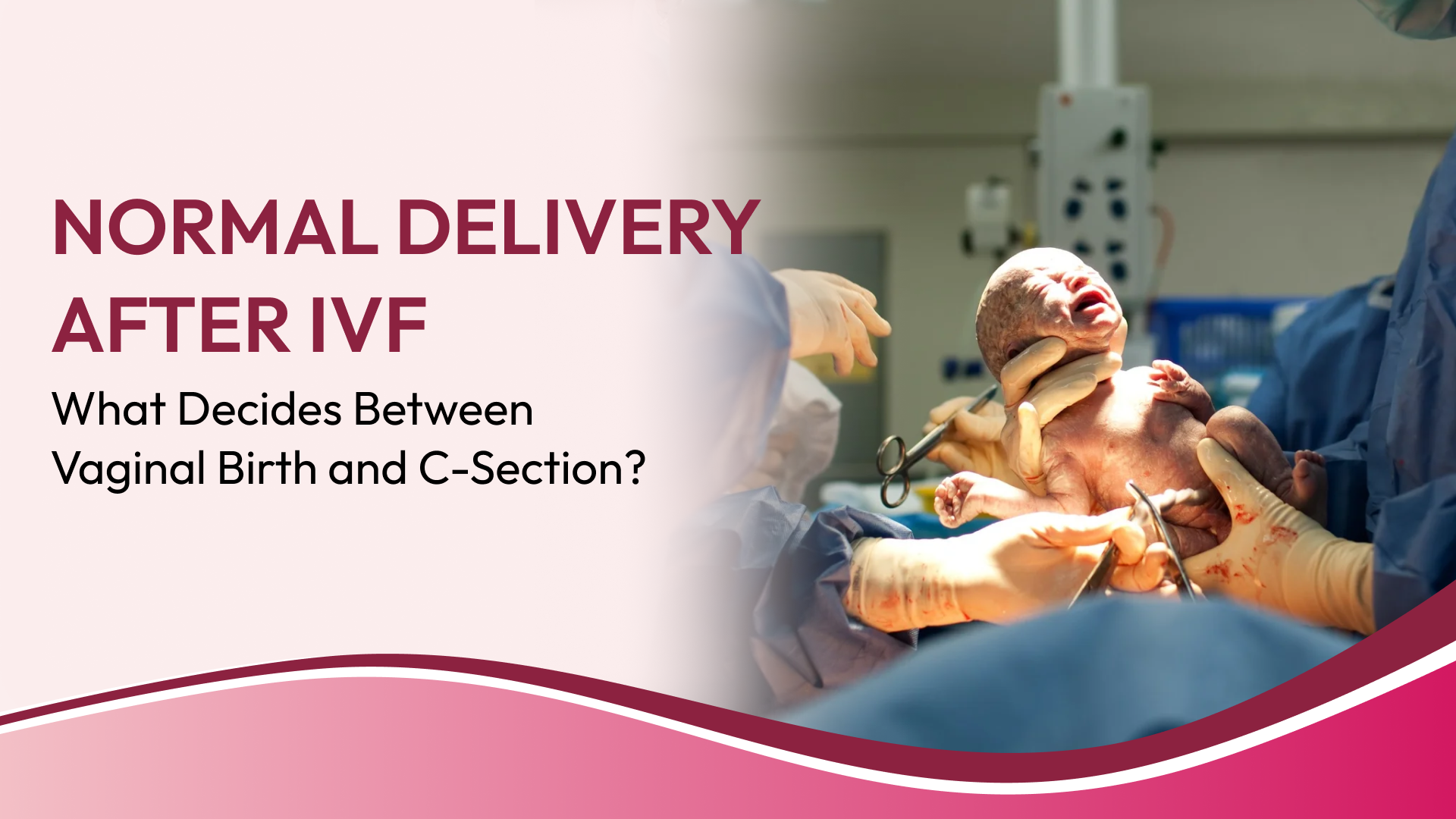

One of the most common questions couples ask once an IVF pregnancy is confirmed is whether it automatically means a C-section. At Dr. Sonil Srivastava’s clinic, the honest answer is that IVF conception itself does not decide your mode of delivery — many other factors do. This article explains what actually influences the decision between normal delivery and C-section after IVF.
Medical Disclaimer: This article is for general educational purposes and is not a substitute for personalised medical advice. Every patient’s history is different — please consult Dr. Sonil Srivastava for an assessment specific to you.
Does Conceiving Through IVF Change How You Deliver?
IVF affects how conception happens, not how labour and delivery must proceed. Women who conceive through IVF can and often do have normal vaginal deliveries, provided there are no separate obstetric reasons for a C-section. This is explained to every patient starting treatment at our IVF center, since the misconception that IVF automatically means surgery causes unnecessary anxiety.
Pregnancy Monitoring Considerations for IVF Pregnancies
IVF pregnancies are often monitored slightly more closely in the first trimester, partly because of the investment involved and partly because IVF pregnancies have a somewhat higher likelihood of certain complications like multiple pregnancy. Ongoing monitoring is coordinated closely with our test tube baby center team even after the pregnancy is confirmed.
Factors That Support a Normal Delivery After IVF
A single, well-positioned baby, a healthy placenta, no significant pregnancy complications, and a mother in good general health are the main factors that support attempting a normal delivery, regardless of how the pregnancy was conceived. Our detailed article comparing normal delivery and C-section covers these obstetric factors in more general depth.
Why Age and Underlying Fertility Diagnosis Still Matter
Women who needed IVF due to conditions like severe endometriosis, prior uterine surgery, or advanced maternal age may have additional factors that influence delivery planning, separate from the IVF process itself. These considerations often connect back to the same underlying issues discussed in our article on repeated IVF failure and its investigation, since the original diagnosis can carry forward into pregnancy planning.
When a C-Section May Be Recommended Instead
A C-section becomes more likely with multiple pregnancy (twins or more, which is somewhat more common after IVF), placenta previa, breech position, or if the mother has had a prior uterine surgery such as a myomectomy. Each of these is assessed individually during antenatal visits, and the reasoning is always discussed clearly at our fertility clinic and during ongoing obstetric care.
Labour Decisions: What Changes and What Doesn’t
Once labour begins, it is managed the same way regardless of how conception occurred — progress is monitored, and decisions are made based on how the mother and baby are responding, not on the fact that IVF was used. Dr. Sonil Srivastava’s approach, detailed on our About page, emphasises this continuity between fertility treatment and delivery care.
Why Continuity of Care Matters From IVF to Delivery
Being cared for by a team that understands your full fertility history, rather than switching providers midway through pregnancy, allows delivery decisions to be made with complete context. If you would like to discuss your specific pregnancy and delivery plan, our Contact Us page is the fastest way to reach the team.
Conclusion
A normal delivery after IVF is entirely possible and, in fact, common — the mode of conception does not by itself determine how you will deliver. What matters is your individual pregnancy health, any underlying diagnosis, and how labour progresses. Reach out through our Contact Us page to discuss your delivery plan with Dr. Sonil Srivastava.
Frequently Asked Questions
Does IVF pregnancy always require a C-section?
No, IVF conception alone does not require a C-section; the decision depends on the same obstetric factors as any other pregnancy.
Are IVF pregnancies more likely to have complications?
Some studies suggest a slightly higher likelihood of certain complications, particularly with multiple pregnancies, but many IVF pregnancies proceed without complications.
Can a woman who had a myomectomy have a normal delivery?
It depends on the extent of the uterine surgery; some cases are advised towards C-section to reduce the risk of uterine rupture during labour.
Is closer monitoring needed throughout an IVF pregnancy?
Monitoring is often slightly more frequent, especially in early pregnancy, but this generally reduces once the pregnancy is progressing normally.
Does age at conception affect delivery decisions after IVF?
It can be one factor considered alongside overall health, since IVF patients are sometimes older at the time of conception.
Should I continue with the same doctor from IVF through delivery?
Continuity of care can be valuable since your doctor already understands your fertility history, though this is a personal choice.
Conceived through IVF and planning your delivery? Discuss your birth plan with Dr. Sonil Srivastava, Best Pregnancy Specialist for Normal Delivery in Bhopal. Book your consultation with Dr. Sonil Srivastava.