

Introduction
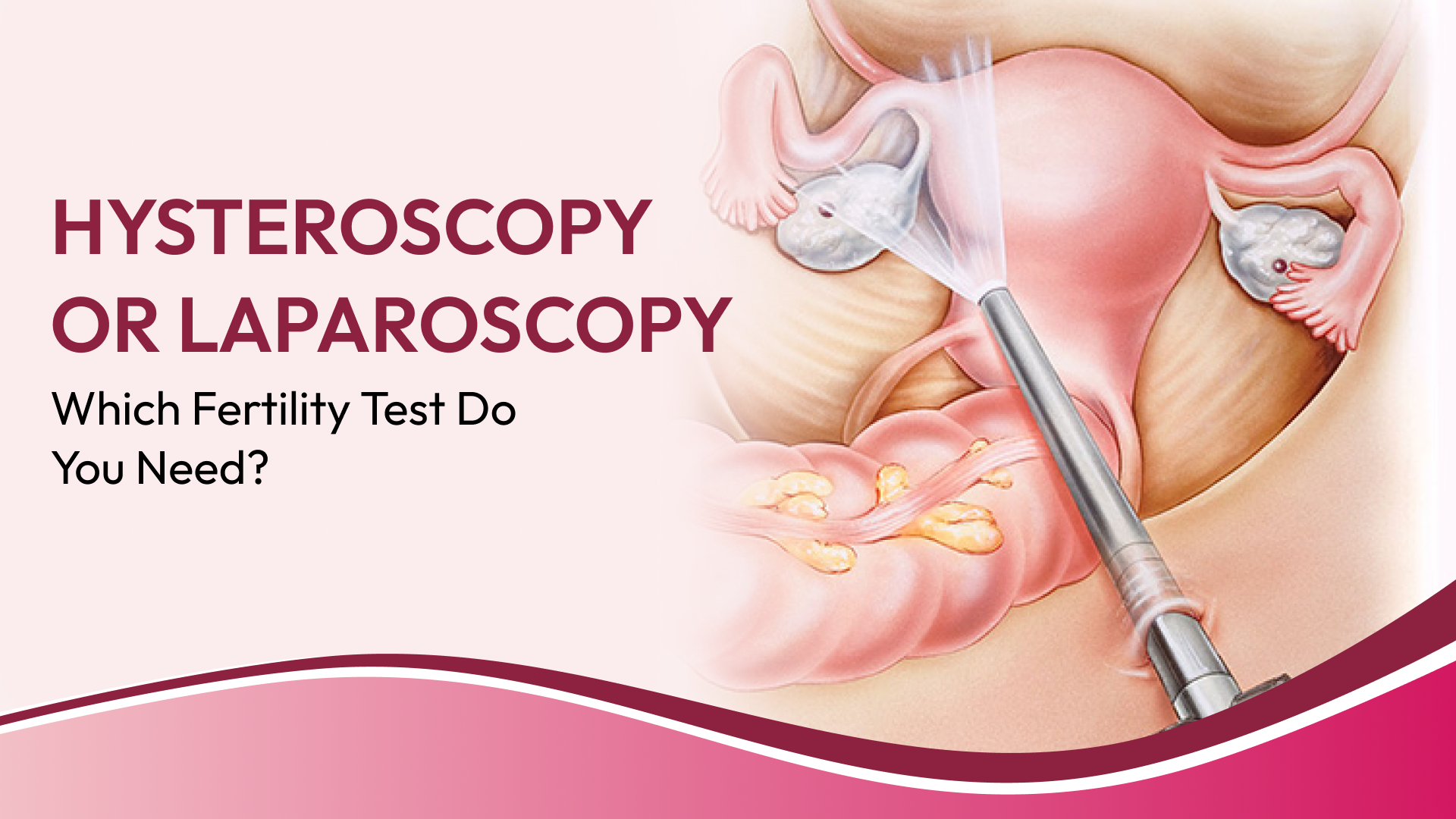
When a woman or couple is evaluated for infertility, the investigation eventually reaches a point where structural causes need to be ruled out or identified. Two minimally invasive procedures sit at the heart of this structural evaluation: hysteroscopy and laparoscopy. Both involve cameras and small instruments. Both are done under anaesthesia. Yet they are fundamentally different procedures that look at entirely different parts of the reproductive anatomy.
The confusion between the two is understandable, but the distinction matters enormously — because the problem they diagnose, and the treatment that follows, are completely different. This article clarifies exactly what each procedure does, which problems each one detects, and when one, the other, or both are needed in a fertility evaluation.
The Fundamental Difference
The simplest way to understand the difference:
- Hysteroscopy looks INSIDE the uterus — specifically the uterine cavity and the openings of the fallopian tubes from within the uterus
- Laparoscopy looks OUTSIDE the uterus — at the pelvic cavity, the outer surface of the uterus, the ovaries, fallopian tubes, and surrounding structures
They are literally looking at opposite sides of the uterine wall.
What Is Hysteroscopy?
Hysteroscopy involves inserting a thin telescope (hysteroscope) through the vagina and cervix into the uterine cavity. The cavity is distended with fluid (usually saline or glycine), which creates space for visualisation. The surgeon can see the entire inside of the uterus — its walls, the endometrial lining, and the tubal ostia (openings of the fallopian tubes at the top of the uterine cavity).
What Hysteroscopy Can Diagnose
- Endometrial polyps — small, usually benign growths from the uterine lining that can impair implantation
- Submucosal fibroids — fibroids that protrude into the uterine cavity and directly interfere with embryo implantation
- Uterine adhesions (Asherman’s syndrome) — intrauterine scar tissue from previous surgery, infection, or D&C that distorts the cavity
- Uterine septum — a partial or complete partition dividing the uterine cavity, associated with recurrent miscarriage
- Congenital uterine anomalies — arcuate uterus, bicornuate uterus configurations visible from inside
- Chronic endometritis — redness, micropolyps, and strawberry pattern appearance suggesting chronic uterine infection
What Hysteroscopy Cannot Diagnose
- Endometriosis on the outer surface of the uterus or pelvic organs
- Ovarian cysts or endometriomas
- Fallopian tube patency (whether tubes are open — this requires laparoscopy with dye test or HSG)
- Pelvic adhesions
- Ovarian reserve or ovarian appearance
What Is Laparoscopy?
Laparoscopy involves inserting a thin telescope (laparoscope) through a small incision near the navel, into the peritoneal cavity. The abdomen is inflated with carbon dioxide gas to create a working space. The surgeon can visualise and operate on all pelvic organs from the outside — the outer surface of the uterus, the ovaries, the fallopian tubes, the peritoneum (pelvic lining), and surrounding structures.
What Laparoscopy Can Diagnose
- Endometriosis — implants, adhesions, ovarian endometriomas
- Pelvic adhesions — fibrous bands from previous infection, surgery, or endometriosis
- Subserosal and intramural fibroids — fibroids on the outside or within the wall of the uterus
- Fallopian tube patency — by injecting coloured dye through the cervix and watching it flow from the tube ends (chromopertubation)
- Ovarian cysts — their size, appearance, and relationship to surrounding structures
- Uterine surface abnormalities — including deep endometriosis infiltrating the uterine wall
- Ectopic pregnancy confirmation and management
What Laparoscopy Cannot Diagnose
- Problems inside the uterine cavity (polyps, submucosal fibroids, adhesions, septum)
- Endometrial thickness or quality
- Very early uterine abnormalities only visible from within the cavity
A Side-by-Side Comparison
Feature | Hysteroscopy | Laparoscopy |
What it sees | Inside uterine cavity | Pelvic cavity (outside uterus) |
Entry point | Through vagina & cervix | Small incision near navel |
Anaesthesia | Local or general | General anaesthesia |
Diagnoses | Polyps, adhesions, septum, submucosal fibroids | Endometriosis, adhesions, tube patency |
Treats | Removes polyps, adhesions, septum | Removes endometriosis, cysts, adhesions |
Recovery | 1–2 days | 7–14 days |
Best for | Recurrent implantation failure, miscarriage | Unexplained infertility, pelvic pain, suspected endometriosis |
When Is Hysteroscopy Recommended in Infertility?
- Recurrent implantation failure (failed IVF cycles despite good embryos) — to rule out uterine cavity abnormalities
- Recurrent miscarriage — to rule out septum, adhesions, or polyps
- Abnormal uterine bleeding — heavy or irregular periods that may suggest polyps or fibroids
- Abnormal findings on transvaginal ultrasound — endometrial thickening, suspected polyp or fibroid
- Abnormal HSG (hysterosalpingography) — to confirm and treat any intrauterine filling defect
- Before starting IVF — many fertility specialists recommend a diagnostic hysteroscopy as part of the pre-IVF workup to ensure the uterine cavity is normal
When Is Laparoscopy Recommended in Infertility?
- Unexplained infertility — when basic workup is normal but conception has not occurred
- Suspected endometriosis — painful periods, pelvic pain, pain with intercourse
- Suspected tubal factor — history of PID, ectopic pregnancy, previous pelvic surgery
- Abnormal HSG showing tubal blockage — to confirm and potentially treat
- Repeated IUI failures — to investigate structural causes before escalating to IVF
- Ovarian cysts — large or persistent cysts requiring surgical evaluation
When Are Both Needed?
In clinical practice, both procedures are frequently performed together in the same anaesthetic sitting — a combined hysteroscopy and laparoscopy. This is particularly useful when:
- A woman has unexplained infertility and both uterine cavity and pelvic factors need evaluation
- Recurrent implantation failure where both intrauterine and pelvic causes are being investigated
- Suspected combined pathology — for example, submucosal fibroid plus endometriosis
Performing both together is efficient, reduces anaesthetic exposure, and provides a complete structural picture in a single sitting.
HSG vs Hysteroscopy — Is HSG Enough?
Hysterosalpingography (HSG) is a radiological test where dye is injected through the cervix and X-rays taken to visualise the uterine cavity and tubes. While HSG is useful as a screening tool, it has significant limitations compared to hysteroscopy:
- HSG can miss small polyps, adhesions, and early uterine septa
- HSG has a significant false positive rate — apparent filling defects that are actually bubbles or artefacts
- HSG cannot treat abnormalities; hysteroscopy both diagnoses and treats in the same sitting
For women with suspected intrauterine pathology or before IVF, hysteroscopy is more accurate and more clinically useful than HSG alone.
Role of Dr. Sonil Srivastava — Best Laparoscopic Surgeon in Bhopal
At Dr. Sonil Srivastava’s fertility clinic in Bhopal, both hysteroscopy and laparoscopy are offered as part of a comprehensive infertility evaluation. As one of the best laparoscopic surgeons in Bhopal, Dr. Srivastava brings over 16 years of surgical expertise to every procedure, ensuring that:
- The right procedure is recommended based on your specific symptoms and investigation findings
- When both procedures are needed, they are performed together to minimise patient burden
- Any pathology found is treated in the same sitting where possible
- The results directly inform your personalised fertility treatment plan
Whether you need a hysteroscopy, laparoscopy, or both, the goal is always to give you the clearest possible picture of your reproductive anatomy so that the right treatment can begin without delay.
Consult Dr. Sonil Srivastava — Best Gynaecologist in Bhopal
E-3/148, Arera Colony, Bhopal, MP 462016 | +91-9897576976 | drsonilsrivastava.in