

Introduction
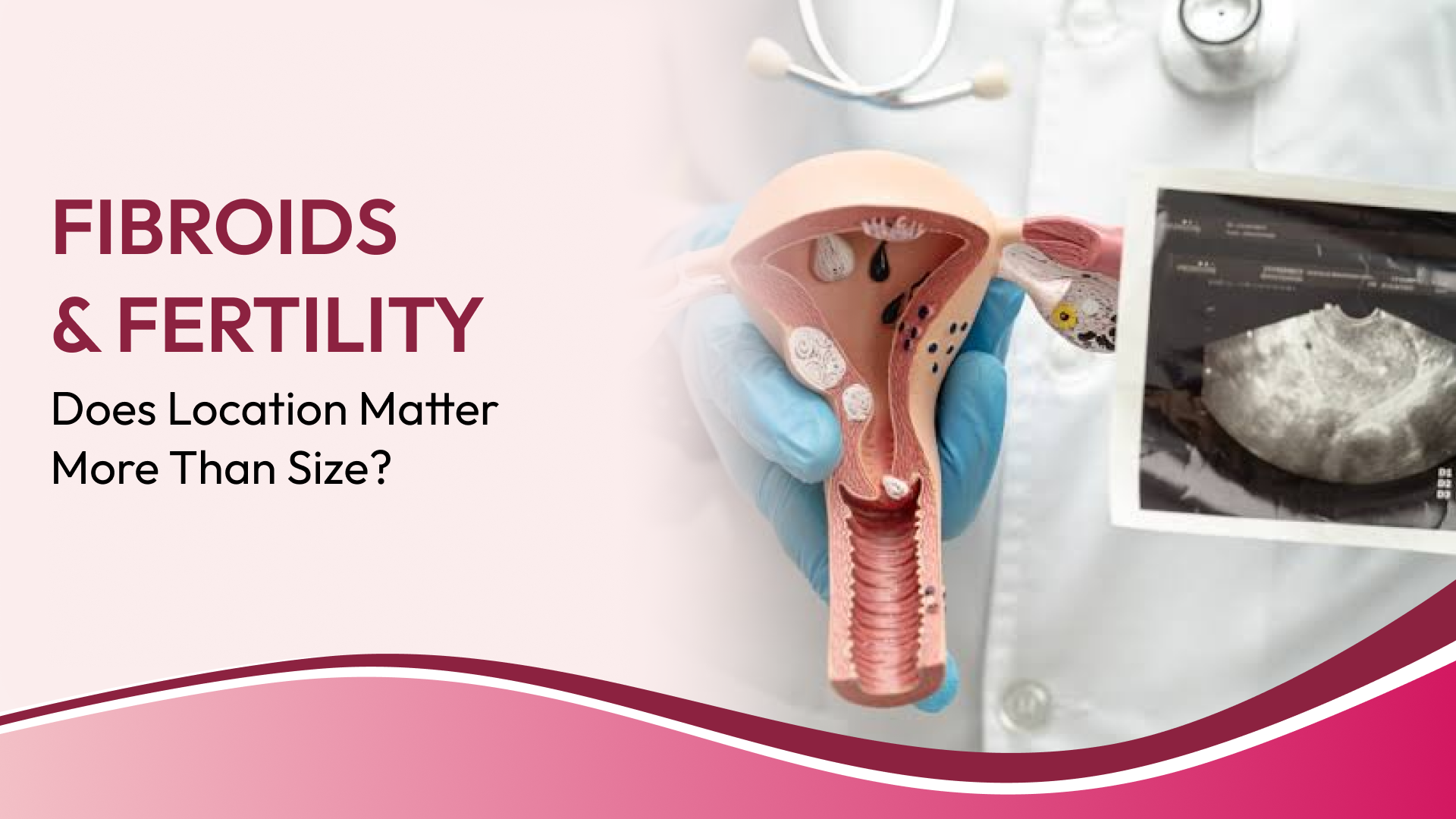
Uterine fibroids (leiomyomas) are the most common benign tumours of the female reproductive tract, affecting up to 70–80% of women by the age of 50. Yet their impact on fertility is not uniform — it depends almost entirely on where in the uterus the fibroid is located. This seemingly simple distinction — location — determines whether a fibroid is likely to impair fertility, how significantly it does so, whether it needs to be removed before fertility treatment, and which surgical approach is most appropriate.
Understanding the three main types of fibroids by location — submucosal, intramural, and subserosal — is therefore essential for any woman who has been diagnosed with fibroids and is concerned about her fertility. Dr. Sonil Srivastava, a leading uterine fibroids specialist and laparoscopic surgeon in Bhopal, helps women navigate these decisions every day.
The Three Types of Fibroids by Location
1. Submucosal Fibroids — Inside the Uterine Cavity
Submucosal fibroids grow from the inner muscle layer of the uterus and project into the uterine cavity — the space where implantation occurs and where the baby grows. Even a small submucosal fibroid can significantly disrupt this environment.
Impact on fertility: Submucosal fibroids have the strongest negative impact on fertility of all fibroid types. They impair fertility by:
- Distorting the uterine cavity, reducing available space for implantation
- Impairing embryo implantation by altering local blood flow and endometrial receptivity
- Mechanically obstructing the fallopian tube openings (tubal ostia)
- Increasing miscarriage rates — submucosal fibroids are significantly associated with early pregnancy loss
Treatment approach: Submucosal fibroids should almost always be removed before attempting conception — naturally or through IVF. The standard treatment is hysteroscopic myomectomy — removing the fibroid through the cervix using a hysteroscope, without any skin incisions. This is a daycare procedure with rapid recovery.
Classification: Submucosal fibroids are classified by the FIGO Leiomyoma Classification System based on how deeply they are embedded in the muscle wall (Type 0: entirely within cavity; Type 1: less than 50% intramural; Type 2: 50% or more intramural).
2. Intramural Fibroids — Within the Uterine Wall
Intramural fibroids grow within the muscular wall of the uterus (myometrium) without significantly distorting the inner or outer surface of the uterus. They are the most common type of fibroid overall.
Impact on fertility: The relationship between intramural fibroids and fertility is more complex and debated. The general understanding is:
- Small intramural fibroids (under 3–4 cm) that do not distort the cavity: minimal or no impact on fertility
- Larger intramural fibroids (over 4–5 cm): associated with reduced pregnancy rates and increased miscarriage, possibly by altering uterine blood flow and impairing implantation
- Intramural fibroids that distort the endometrial cavity: behave more like submucosal fibroids and have a more significant impact
Treatment approach: The decision to remove intramural fibroids before fertility treatment is nuanced. For fibroids over 4 cm, particularly those close to the uterine cavity, myomectomy is generally recommended. Laparoscopic myomectomy (keyhole surgery) is the preferred approach for intramural fibroids, allowing removal through small incisions with faster recovery than open surgery.
3. Subserosal Fibroids — On the Outside of the Uterus
Subserosal fibroids grow from the outer surface of the uterus, projecting outward into the pelvic cavity. They can become very large and may develop a stalk (pedunculated subserosal fibroids).
Impact on fertility: Subserosal fibroids generally have the least impact on fertility of the three types, provided they do not distort the uterine cavity or compress adjacent structures. However:
- Very large subserosal fibroids can compress the fallopian tubes or ovaries
- Pedunculated fibroids can cause pelvic pain or torsion (twisting), requiring urgent surgery
- Subserosal fibroids that are very large may alter uterine blood supply
Treatment approach: Small subserosal fibroids without symptoms or cavity distortion are often observed rather than operated on in a fertility context. Surgery is recommended for large, symptomatic, or pedunculated subserosal fibroids, or those that are compressing adjacent structures.
The FIGO Classification System — A Useful Framework
The FIGO (International Federation of Gynecology and Obstetrics) classification uses a numbering system from 0 to 8:
- Type 0–2: Submucosal (cavity-distorting)
- Type 3–5: Intramural (within the muscle wall)
- Type 6–7: Subserosal
- Type 8: Special locations (e.g., cervical, parasitic)
This classification helps standardise surgical planning and communication between specialists. When your doctor describes a fibroid as ‘Type 1’ or ‘Type 4’, they are using this system to specify the extent of its involvement in the wall and cavity.
Does Fibroid Size Matter?
Yes — alongside location, size is a major determinant of both fertility impact and surgical complexity. In general:
- Fibroids under 3 cm that are intramural or subserosal and not distorting the cavity: typically do not require removal before fertility treatment
- Fibroids 3–5 cm: require careful evaluation and shared decision-making
- Fibroids over 5 cm: more likely to require surgery, particularly if intramural or causing symptoms
- Multiple fibroids: the combined effect of several smaller fibroids may be equivalent to a single large one
Laparoscopic Myomectomy — The Preferred Surgical Approach
For intramural and subserosal fibroids requiring removal, laparoscopic myomectomy is the preferred approach at Dr. Sonil Srivastava’s clinic in Bhopal. Compared to open (abdominal) myomectomy, laparoscopic myomectomy offers:
- Smaller incisions (3–4 incisions of 5–12 mm)
- Significantly less blood loss
- Shorter hospital stay (typically 1–2 days)
- Faster return to normal activity (1–2 weeks vs 4–6 weeks for open surgery)
- Comparable surgical outcomes in terms of fibroid removal and uterine reconstruction
- Lower risk of adhesion formation than open surgery
After laparoscopic myomectomy, a waiting period of 3–6 months is typically recommended before attempting conception, to allow the uterine wall to heal adequately, particularly if the cavity was entered during surgery.
Hysteroscopic Myomectomy for Submucosal Fibroids
For submucosal fibroids, hysteroscopic myomectomy is the gold standard. This is performed entirely through the vagina and cervix — no skin incisions, no general anaesthesia in many cases, and recovery is typically just 1–2 days. The fibroid is resected using a hysteroscopic resectoscope or morcellator.
The key factor is the FIGO type: Type 0 fibroids are the most straightforward; Type 2 fibroids (deeply embedded) may require a staged procedure or combined laparoscopic approach. An experienced hysteroscopic surgeon can safely remove most submucosal fibroids in a single sitting.
Should Fibroids Be Removed Before IVF?
The question of whether to remove fibroids before starting IVF is one of the most frequently debated topics in reproductive medicine. The consensus guidance is:
- Submucosal fibroids distorting the cavity: YES — remove before IVF
- Intramural fibroids over 4 cm distorting the cavity: YES — remove before IVF
- Intramural fibroids under 4 cm not distorting the cavity: INDIVIDUALISED decision
- Subserosal fibroids not distorting the cavity or causing symptoms: usually NO surgery before IVF
Time is a factor, particularly for older women or those with diminished ovarian reserve. Sometimes the benefit of removing a borderline fibroid must be weighed against the time lost to surgery and recovery.
Dr. Sonil Srivastava — Specialist in Fibroid Treatment and Laparoscopic Myomectomy in Bhopal
Dr. Sonil Srivastava is recognised as one of the best laparoscopic surgeons in Bhopal for fibroid treatment, with extensive experience in both hysteroscopic and laparoscopic myomectomy. Her patient-centred approach ensures that:
- Each fibroid is assessed individually based on type, size, location, and the patient’s fertility goals
- The least invasive surgical approach is always chosen
- The uterus is reconstructed meticulously to preserve future fertility
- Comprehensive post-operative fertility planning is provided
If you have been diagnosed with uterine fibroids and are trying to conceive, or if you have concerns about the impact of fibroids on your fertility, a consultation with Dr. Sonil Srivastava at her clinic in Arera Colony, Bhopal, will give you clarity and a clear path forward.
Consult Dr. Sonil Srivastava — Best Gynaecologist in Bhopal
E-3/148, Arera Colony, Bhopal, MP 462016 | +91-9897576976 | drsonilsrivastava.in