

Introduction
An ectopic pregnancy — a pregnancy that implants and grows outside the uterus, most commonly in a fallopian tube — is one of the most urgent gynaecological emergencies. If untreated, a tubal ectopic pregnancy can rupture, causing life-threatening internal haemorrhage. The priority is always the woman’s safety.
However, once the immediate medical situation is stabilised, an important secondary question emerges for women who wish to conceive in the future: can surgery be performed in a way that preserves as much fertility as possible? Laparoscopic surgery has transformed the management of ectopic pregnancy, making fertility-sparing approaches feasible in carefully selected cases.
What Is an Ectopic Pregnancy?
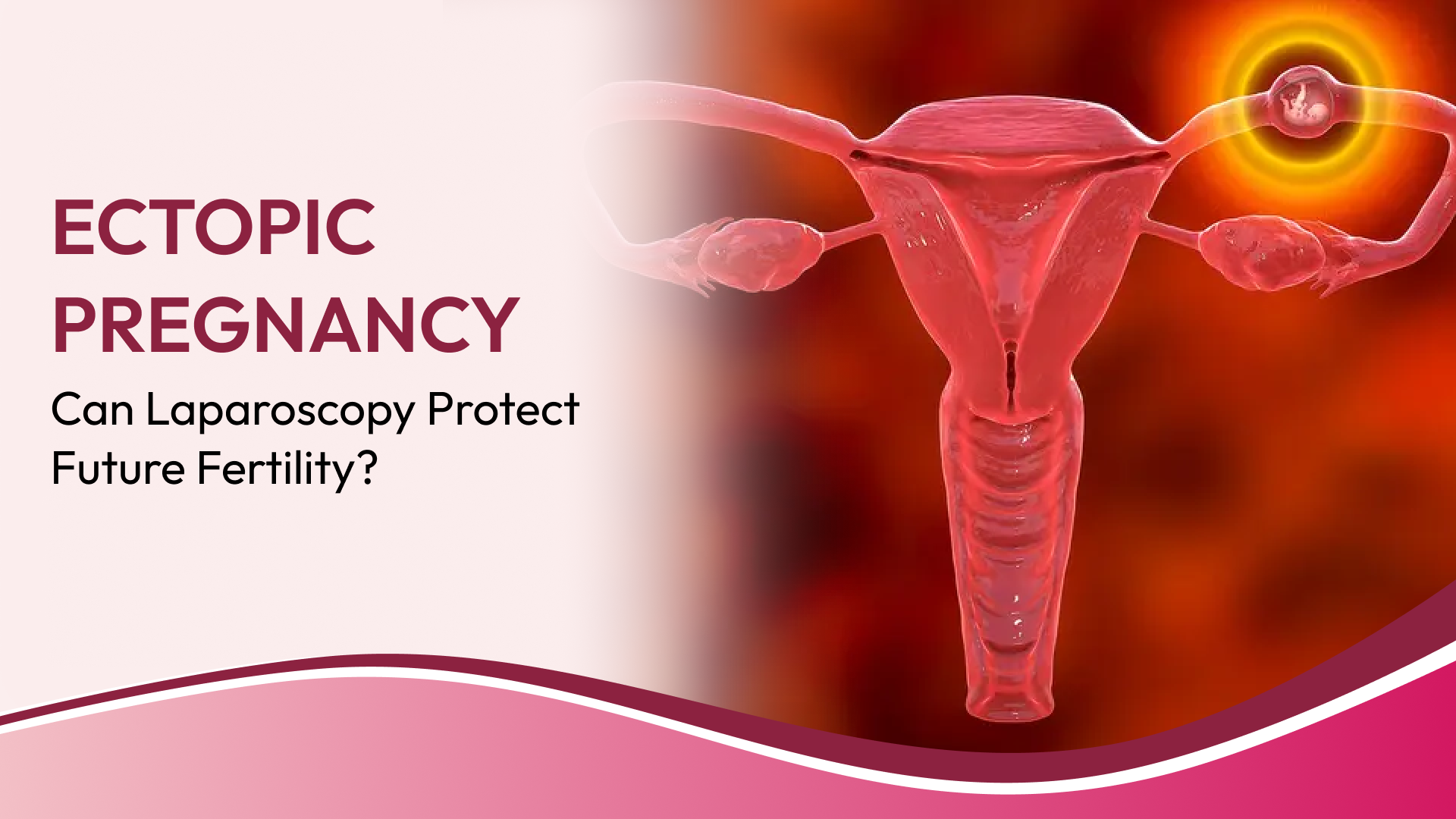
In a normal pregnancy, the fertilised egg travels through the fallopian tube to implant in the uterine cavity. In an ectopic pregnancy, implantation occurs outside the uterus — in the fallopian tube in 95% of cases (tubal ectopic), and rarely in the ovary, cervix, or abdominal cavity.
As the pregnancy grows within the tube, it eventually distends and may rupture the tube. Signs of a tubal ectopic pregnancy include:
- Missed period followed by one-sided lower abdominal pain
- Vaginal bleeding (often lighter or darker than a normal period)
- Shoulder tip pain (from blood irritating the diaphragm — a sign of internal bleeding)
- Dizziness, fainting, or collapse (in cases of rupture with significant haemorrhage)
- Positive pregnancy test with hCG levels that rise more slowly than expected
Risk Factors for Ectopic Pregnancy
- Previous ectopic pregnancy — the most significant risk factor
- Previous pelvic surgery or pelvic infection (PID) that may have scarred the tubes
- Endometriosis affecting the fallopian tubes
- Previous tubal surgery (including sterilisation reversal)
- Use of intrauterine device (IUD) at time of conception
- Smoking
- Assisted reproductive techniques (IVF/IUI) — slightly increased risk due to multiple embryo transfer
Management Options for Ectopic Pregnancy
1. Expectant Management
In some cases — where the ectopic is small, hCG levels are low and falling, and the woman is haemodynamically stable — it is safe to monitor the pregnancy without intervention, allowing it to resolve spontaneously. Regular blood tests and ultrasound monitoring are required. This approach is suitable only for carefully selected, well-monitored cases.
2. Medical Management — Methotrexate
Methotrexate is a drug that stops the rapidly dividing cells of the ectopic pregnancy from growing, allowing the pregnancy to resolve. It is given as an injection and requires monitoring of hCG levels. Methotrexate is suitable when:
- The ectopic is unruptured and small (usually under 3.5 cm)
- hCG levels are below approximately 5,000 IU/L and declining or plateau-ing
- There are no signs of rupture or significant internal bleeding
- The woman is reliable for follow-up monitoring
3. Surgical Management — Laparoscopy
Surgery is required when the ectopic pregnancy is large, when hCG levels are high, when there are signs of rupture, when medical management has failed, or when there is diagnostic uncertainty. Laparoscopy is the preferred surgical approach in almost all cases.
Laparoscopic Surgery for Ectopic Pregnancy: Salpingostomy vs Salpingectomy
Two laparoscopic surgical approaches are used, and choosing between them involves balancing immediate safety with future fertility:
Salpingostomy — Opening the Tube to Remove the Pregnancy
In salpingostomy, the surgeon makes a small cut along the tube, removes the ectopic pregnancy tissue, and leaves the tube in place — open — to heal. The tube may then be functional for future pregnancies.
When is salpingostomy chosen?
- The contralateral (opposite) tube is absent or damaged — making tube preservation critical for future natural conception
- The ectopic is small and the tube appears healthy and viable
- The woman strongly desires to preserve the tube and understands the risks
Important caveats of salpingostomy:
- Persistent trophoblast (residual pregnancy tissue left in the tube) occurs in approximately 5–15% of cases, requiring additional methotrexate treatment
- The risk of a recurrent ectopic pregnancy in the same tube is slightly higher than after salpingectomy
- If the tube is extensively damaged or diseased, salpingostomy is not appropriate
Salpingectomy — Removing the Fallopian Tube
In salpingectomy, the entire fallopian tube containing the ectopic pregnancy is removed. This is the more definitive surgical treatment.
When is salpingectomy preferred?
- The contralateral tube is normal — so the woman can still conceive naturally through the remaining tube
- The affected tube is extensively damaged, ruptured, or diseased — making functional salvage unlikely
- The ectopic pregnancy is large or the tube is significantly distended
- There is significant intraperitoneal bleeding
- The woman is planning IVF — in which case tube patency is less important than removing the source of risk
Salpingectomy is the more commonly performed procedure for these reasons. It eliminates the risk of persistent trophoblast and future ectopic in the same tube, while not significantly reducing fertility when the other tube is normal.
Laparoscopy vs Open Surgery — Why Laparoscopy Is Preferred
Laparoscopic surgery for ectopic pregnancy has several advantages over open (laparotomy) surgery:
- Smaller incisions — 3 small cuts versus a full abdominal incision
- Shorter hospital stay — typically 1 day versus 3–5 days
- Faster recovery — return to normal activity within 1–2 weeks
- Less postoperative pain
- Comparable or better fertility outcomes
- Lower adhesion formation — important for future fertility
Open surgery (laparotomy) is reserved for cases with life-threatening haemorrhage where speed is paramount and laparoscopic setup would cause dangerous delay.
Fertility After Ectopic Pregnancy — What to Expect
After treatment for ectopic pregnancy, most women are concerned about their future fertility. The outlook depends on:
After Salpingostomy
- Natural conception is possible through the conserved tube
- Intrauterine pregnancy rates of 55–65% within 2 years in studies with a normal contralateral tube
- The risk of a repeat ectopic pregnancy in the conserved tube is approximately 8–10%
After Salpingectomy
- Natural conception through the remaining tube — rates comparable to or slightly lower than salpingostomy in some studies
- Lower risk of repeat ectopic pregnancy compared to salpingostomy
- If the remaining tube is also damaged or absent: IVF is the path to pregnancy
Most women are advised to wait at least 3 months after an ectopic pregnancy before attempting conception again — to allow physical and emotional recovery, and to ensure hCG levels have returned to zero.
When Is IVF the Next Step After Ectopic Pregnancy?
IVF is recommended when:
- Both fallopian tubes have been removed or are severely damaged
- A second ectopic pregnancy has occurred in the remaining tube
- The woman is older (over 37) and natural conception timeline is a concern
- There are additional infertility factors (low sperm count, poor ovarian reserve)
IVF bypasses the fallopian tubes entirely — eggs are retrieved directly from the ovaries and embryos are transferred into the uterine cavity — making it the definitive fertility treatment when tubal function is compromised.
Emotional Recovery After Ectopic Pregnancy
An ectopic pregnancy is a pregnancy loss, and the emotional impact is significant and often underacknowledged. Women may experience grief, anxiety about future pregnancies, fear of another ectopic, or guilt. Supportive counselling and a sensitive, unhurried conversation with your gynaecologist about future options are an important part of the care pathway.
Dr. Sonil Srivastava — Expert Laparoscopic Management of Ectopic Pregnancy in Bhopal
Dr. Sonil Srivastava is an experienced laparoscopic surgeon with extensive expertise in the emergency and elective management of ectopic pregnancy. At her gynaecology centre in Bhopal, she offers:
- Prompt diagnosis using high-resolution transvaginal ultrasound and serial hCG monitoring
- Individualised management — expectant, medical, or surgical — based on the clinical picture
- Laparoscopic salpingostomy or salpingectomy with meticulous technique to preserve future fertility
- Post-operative fertility counselling and planning, including IVF referral when appropriate
If you have had an ectopic pregnancy or are at risk, early consultation with a specialist is essential. Dr. Sonil Srivastava — the best gynaecologist in Bhopal for ectopic pregnancy treatment — is available for urgent and planned consultations.
Consult Dr. Sonil Srivastava — Best Gynaecologist in Bhopal
E-3/148, Arera Colony, Bhopal, MP 462016 | +91-9897576976 | drsonilsrivastava.in